San Pietro in Tuscania… the “emptiness” in which we can dwell – architecture competition
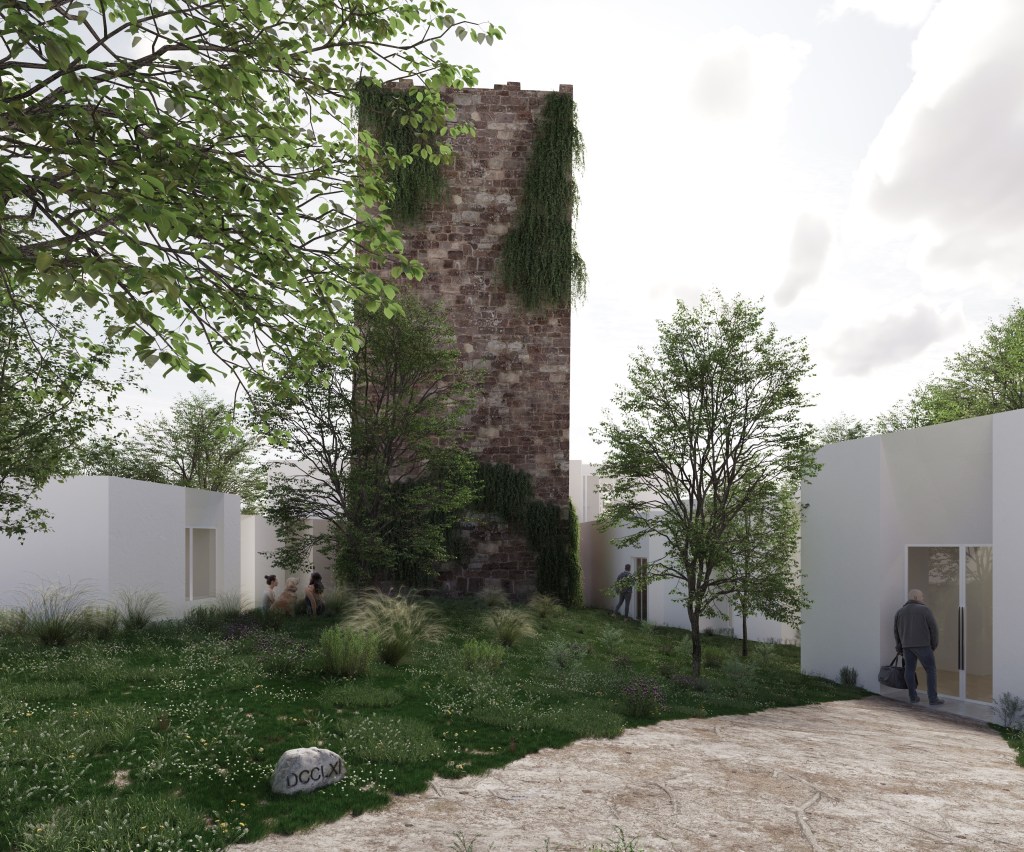
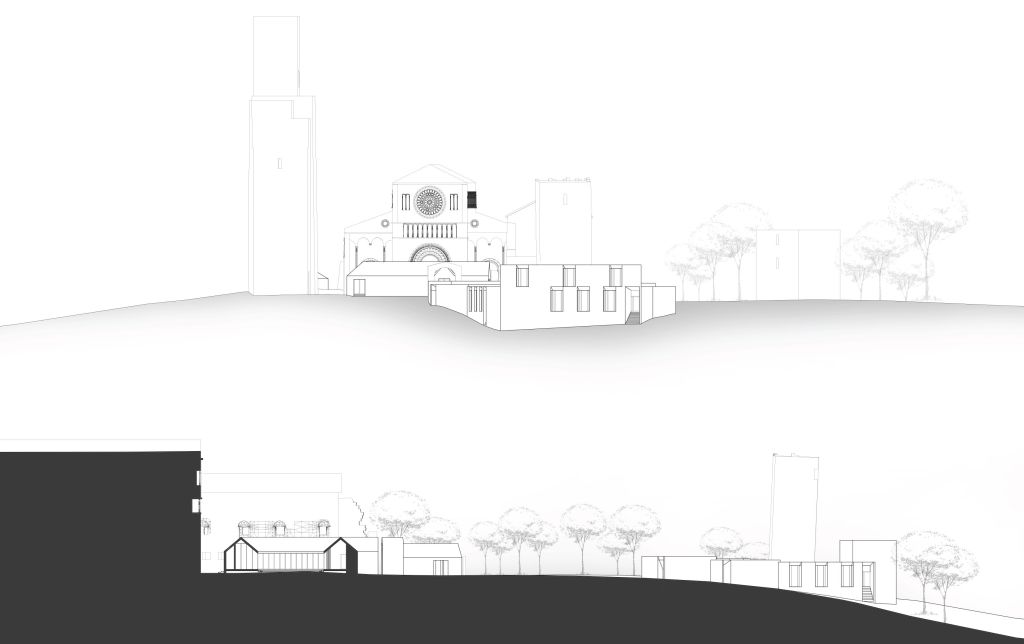
The project starts from the analysis of the existing heritage, considered as a volume in itself and untouchable.
The ultimate goal is to create spaces that compare with the existing buildings and that respect their sacred and historical value.
The eternity of the stone, with which they are made, contrasts with the simplicity of the forms and the neutrality of the new buildings.
Each new intervention is to be considered as a clearly distinguishable volume but linked to the new spatial relationships that are created with the volumes of the San Pietro in Tuscania complex. The project therefore presents itself as “ephemeral” in front of the historical eternity of the existing context: each volume can take on different functions, from collective spaces to more intimate and private ones.
Each volume is designed to accommodate activities of different kinds by exploiting the free-plan spaces, with the idea that the intervention is not only tied to a well-defined series of activities but falls within the concept of Open Architecture.
In this way, thanks to the project it is also possible to enhance the existing heritage, making it usable and open to different uses.
For this reason too, the design research did not start from existing forms but from the search for simple and clear forms, in combination with each other, thus facilitating spatial continuity between the various volumes and the various activities.
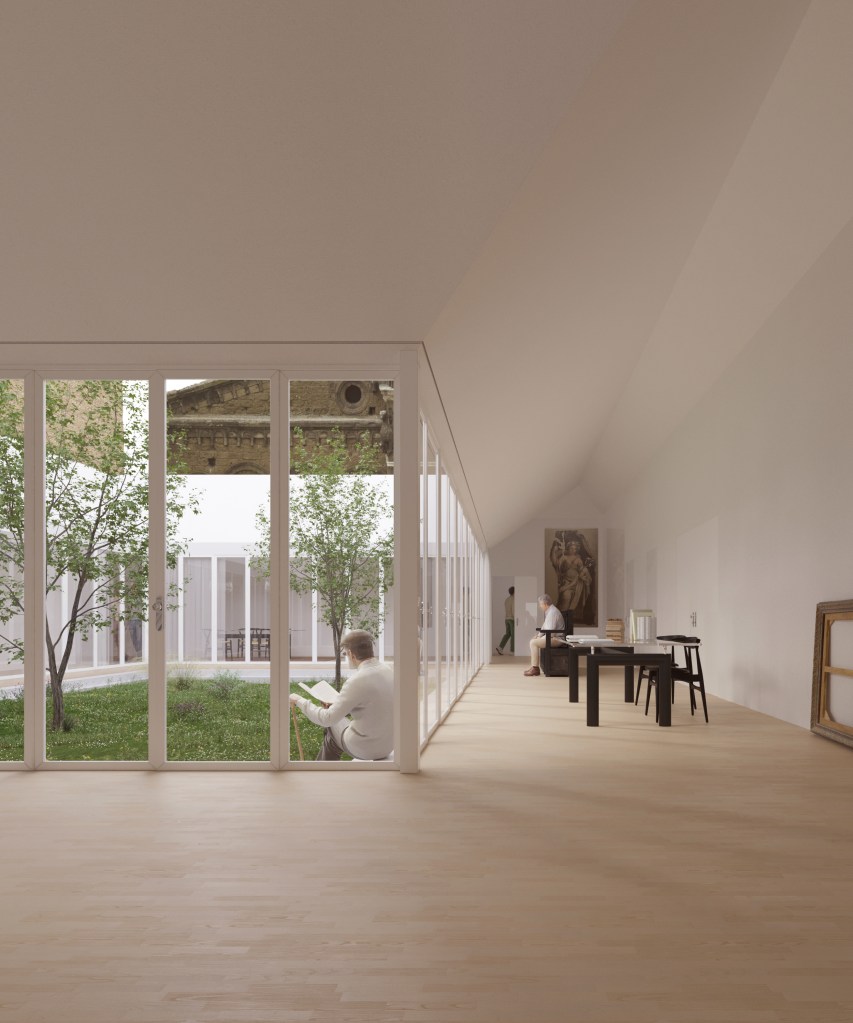
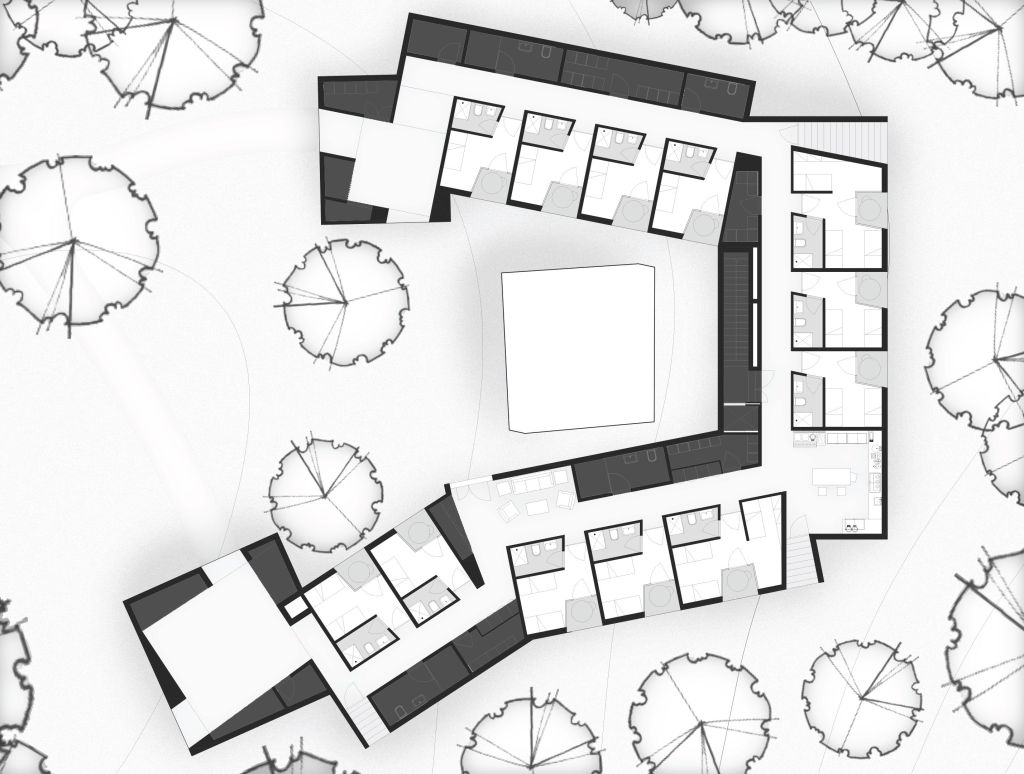
Taking up the theme of the quadriportico of ancient Roman basilicas, the new volume welcomes a central space for gathering and meditation, where people who have come to pray can stop and share moments of sharing. The open-plan layout allows the four arms of the building to be used for different purposes, favoring the various activities that will take place during the Giubileo 2025.
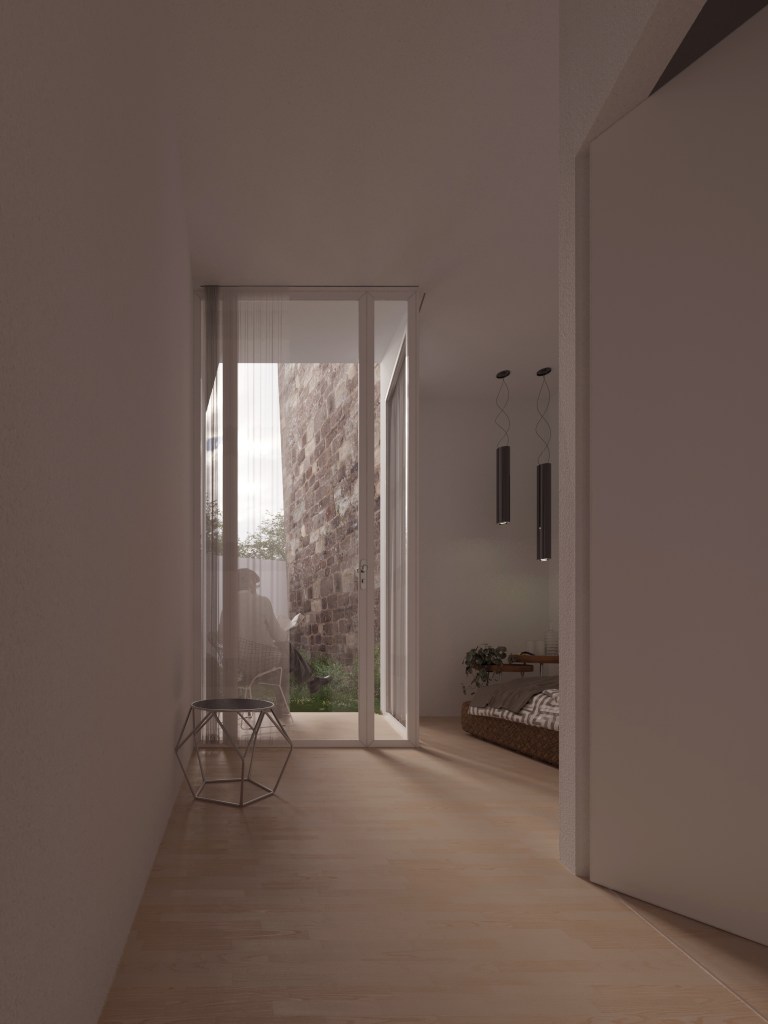
On the other hand, the dormitory takes on a shape that dialogues with the existing topography and the East tower of the complex, “encircling” its sides and creating a new open space for the guests of the complex.
The ends of the dormitories accommodate two flexible spaces, for use by guests and the community for various activities. These spaces, like those present both in the access volume and in the “quadriportico”, can assume and contain various activities in the idea of an architecture that is as flexible as possible.

 AR muRAtuRA Architecture & Visualization
Lascia un commento