
Studio Bettini – Villa Meneghetti – A Contemporary Agritourism Rooted in Place and History – Terraviva Competitions

The project for Villa Meneghetti is rooted in respect for its historical layout and the desire to create an immersive experience that combines
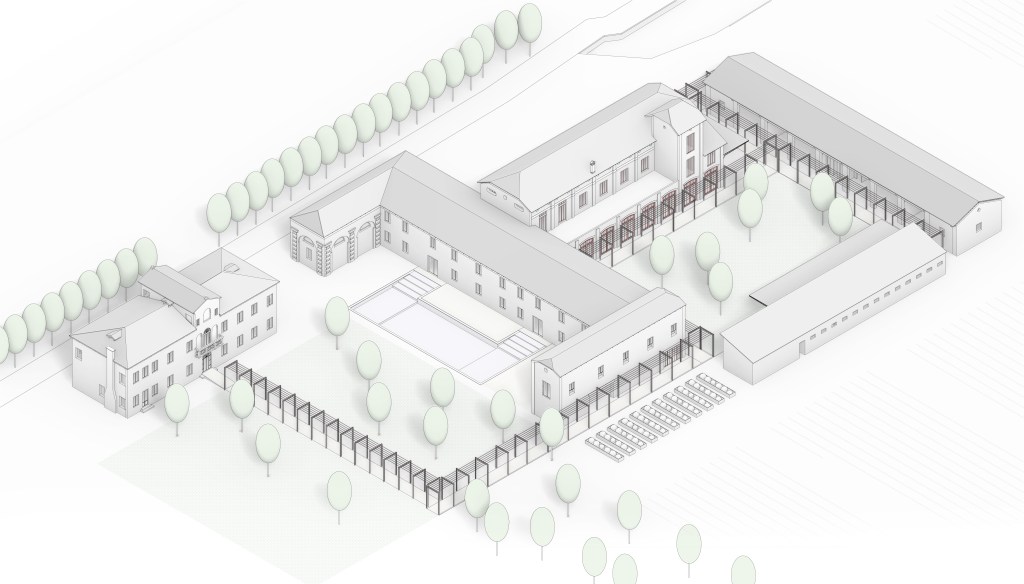
rural hospitality, environmental sustainability, and universal accessibility. The complex is made up of five buildings: the manor house (A),
slightly detached with its own entrance, and four service volumes arranged around the old agricultural courtyard (“aia”).
The proposal preserves the historical legibility of the site, assigning each building a clear and specific function, in line with a contemporary
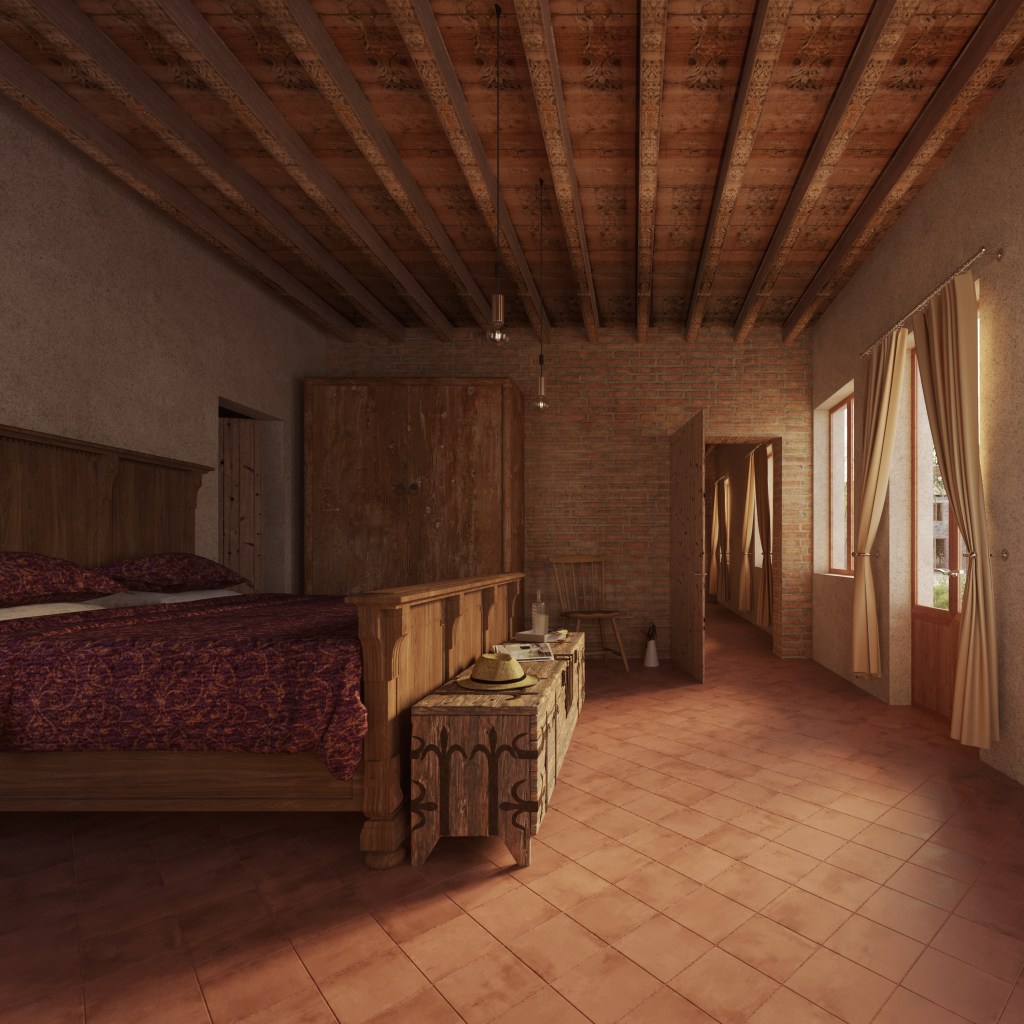
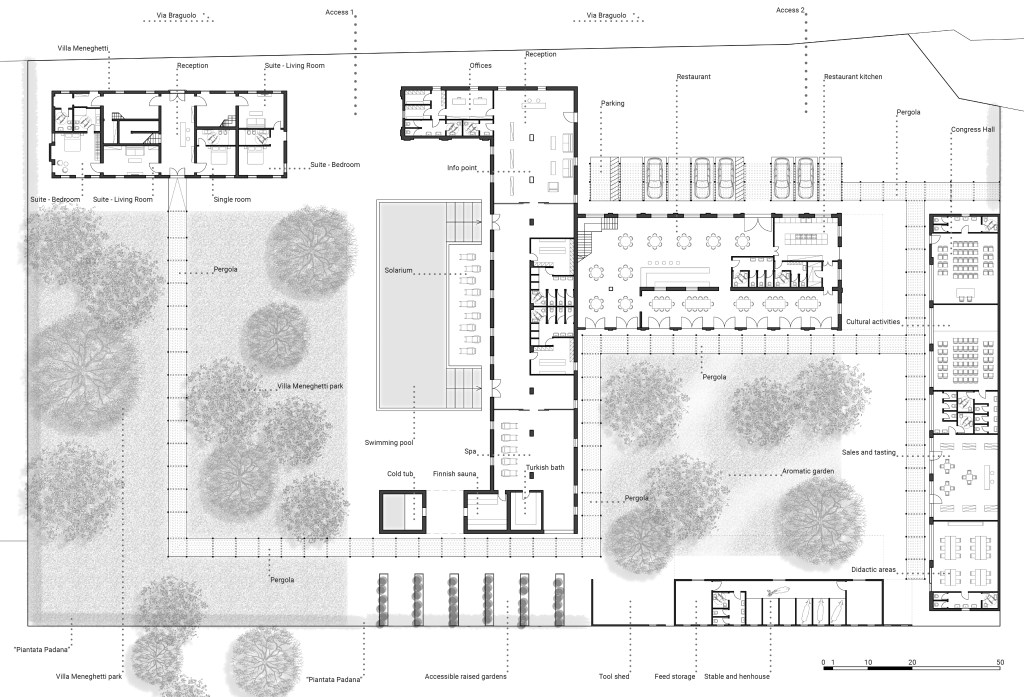
agritourism open to the territory. The villa (Building A) is dedicated to guest accommodations, with rooms and suites accessible from its private entrance on Via Braguolo. Ground-floor rooms are fully accessible and barrier-free, with wheelchair-friendly bathrooms. Building B, adjacent to the main entrance and easily visible from the visitors’ car park, houses the reception and information point. It also includes a wellness area with sauna, Turkish bath, changing rooms, and an outdoor pool with solarium. The pool is accessible via two original ramps, now redesigned as stepped terraces oriented toward the afternoon sun. Building C hosts the restaurant (80–100 seats), with bar, professional kitchen, and service facilities. Building D is a multipurpose space for cultural events, conferences, tastings, educational activities, and the sale of local products. Lastly, Building E retains its agricultural and livestock function, with tool storage, hay and feed facilities, a stable, henhouse, and dedicated restrooms. Outdoor areas will be paved with draining “calcestre” (a mix of gravel and stabilizers), ensuring both water permeability and full wheelchair accessibility. The old courtyard will be replanted with aromatic ground covers and tall, deciduous trees to enhance seasonal character and provide naturalshade.
The landscape design becomes the connective tissue of the entire project: a system of pergolas, covered with wisteria, creates shaded
and accessible paths linking all the buildings. The historic garden in front of the villa and its pergola-lined axis will be preserved and extended,
defining a cohesive network of outdoor routes inspired by the geometry of rural farmyards. To the south of the complex, near the agricultural building, raised garden beds will be installed, accessible to wheelchair users, for educational or recreational activities. The entire perimeter will be redefined using the traditional “piantata padana” method—an agroforestry system that combines grapevines with trees such as elms, field maples, mulberries, willows, and fruit trees like cherries and pears. This agricultural gesture restores identity and rhythm to the landscape, blending production, memory, and hospitality. The project aims to transform Villa Meneghetti into a vibrant, year-round destination—offering cultural, culinary, and regenerative experiences in close contact with nature.
Not a nostalgic replica of the countryside, but a areful reinterpretation, rooted in inclusion, beauty, and historical continuity.

 AR muRAtuRA Architecture & Visualization
Lascia un commento